

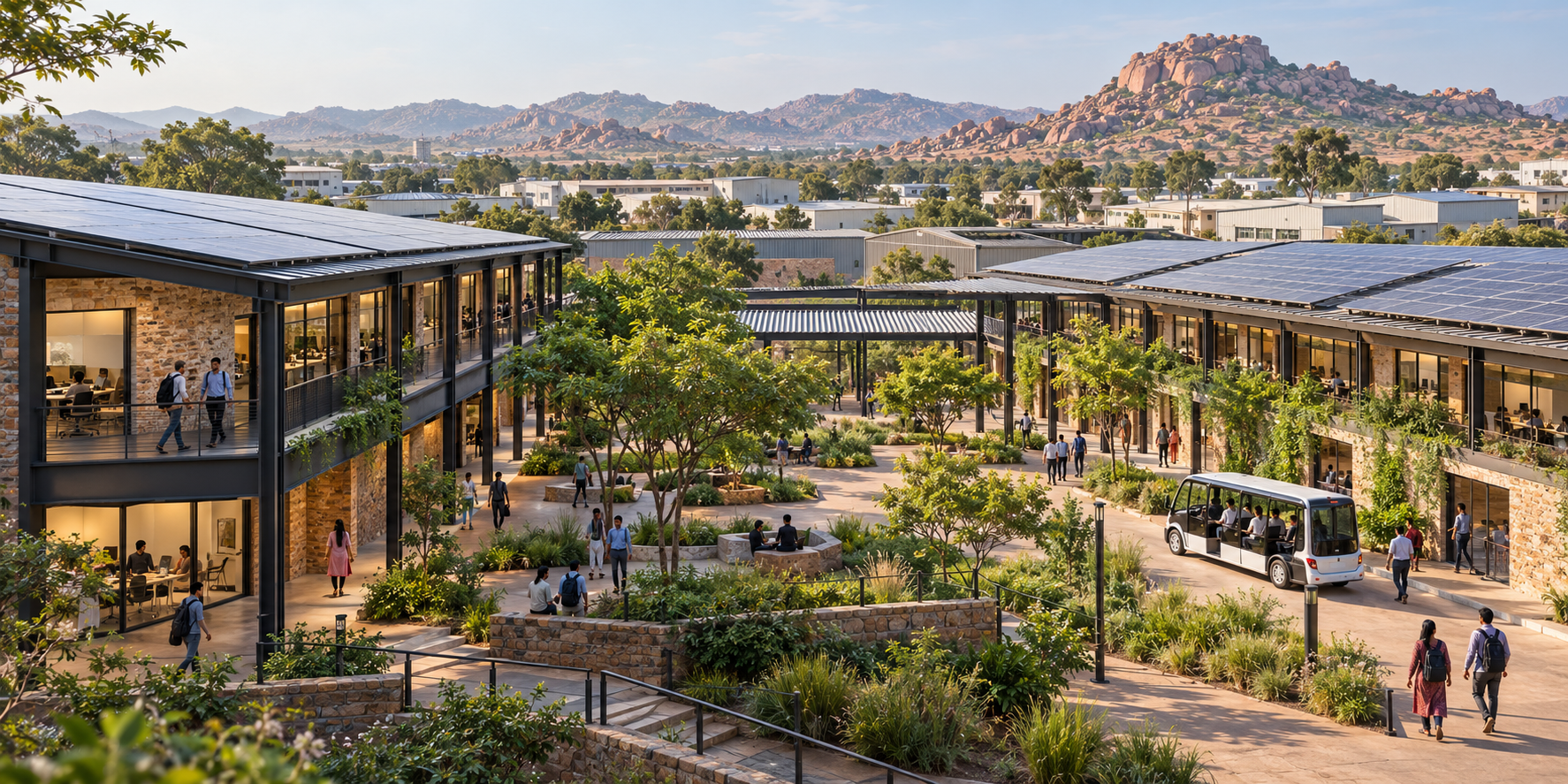
Hampi offers something an ordinary office district cannot manufacture: a remarkable landscape, living villages and the remains of a historic city. It is understandable to imagine technology workers spending their weekdays nearby and their free time exploring the region, bringing business to local guides, food producers and accommodation providers.
My proposal is to study a small government-owned IT campus in the wider Hosapete region, rented to suitable employers, with limited employee housing and carefully managed visitor connections. The condition is essential: the project must not turn working farmland into commercial plots or compromise the heritage that makes Hampi valuable.
This is an editorial proposal. The research for this article did not establish an approved Hampi IT-park project matching this plan, an allocated site, committed tenants or a funded construction programme.
Hampi is already international. Protect that achievement.
The Group of Monuments at Hampi has been on UNESCO’s World Heritage List since 1986. Its significance involves the relationship between architecture and landscape, not merely a collection of isolated buildings. An IT park would not introduce Hampi to the world for the first time.
The ambition should instead be to create worthwhile regional employment while preserving the place people already come to experience. A development that damages its setting could weaken tourism rather than strengthen it.
My starting rule would be to exclude the World Heritage property, its buffer zone and other protected or sensitive land from the campus site search. Even a site beyond those boundaries would need assessment of visual, traffic, water and other effects. Calling somewhere “near Hosapete” does not establish that it lies outside the relevant restrictions.
Current heritage guidance makes planning a prerequisite
In its 2026 decision on Hampi, the World Heritage Committee called for clearer planning and visitor-management arrangements. It expressed concern about completed buildings in the buffer zone before a Heritage Impact Assessment had been submitted, and reiterated that development proposals need assessment and review before difficult-to-reverse decisions.
The same decision notes abandonment of a road-widening scheme near Sanapur and Anegundi and policies supporting local homestay livelihoods. These points matter together: conservation does not mean excluding residents from economic opportunity, but tourism potential is not permission to build wherever demand appears.
Separately, a February 2026 Ministry of Culture explanation describes the AMASR Act’s prohibited and regulated areas around protected monuments. These generally comprise 100 metres from protected limits and a further 200 metres, with the applicable statutory controls. Those distances are not a substitute for the much wider World Heritage boundaries, local planning rules or a parcel-specific permission assessment.
Start with employer demand and an existing urban site
Before announcing a large park, ask potential tenants what work they could realistically locate here. A small software team, business-services operation or training centre has different needs from a major corporate headquarters. Publish credible expressions of interest, expected staffing, required space and lease conditions without presenting enquiries as signed commitments.
Compare existing serviced buildings and previously developed urban land before considering new construction. Public ownership does not make a plot empty of rights: investigate occupation, common use, title, ecology and archaeological sensitivity. Do not describe grazing land, wetlands or apparently vacant village land as automatically available.
A modest pilot could reuse a suitable building and expand only if occupancy, services and conservation conditions justify it. The assessment should allow a clear “do not proceed” outcome if no acceptable site or commercial case exists. A desirable tourism address is not enough to establish a viable office market.
Government ownership should come with published accounts
The government could retain ownership and lease workspace through transparent, competitive arrangements. Professional facility management could operate under a performance-based contract, while ownership, approvals, audit and enforcement remain public responsibilities. This is a proposed model, not a description of an existing Hampi lease scheme.
Rent would be gross income. To judge the public benefit, deduct maintenance, staffing, insurance, financing, utilities that are subsidised, and eventual major repairs. Include the value of the land and any public capital contribution in the appraisal. A campus can collect rent and still cost taxpayers money.
Publish occupancy, rent collected, arrears, operating expenditure, employer commitments and verified local jobs. Disclose any concessional lease and its public purpose. Use an independent audit and a complaints route; government control alone does not prevent poor management or preferential allocation.
Keep farms productive, not merely attractive
The non-conversion condition should be written into the proposal before land values start rising. Map agricultural parcels, irrigation channels, access tracks, common resources and heritage-sensitive areas. Establish a publicly explained no-conversion area for the project’s planning purposes through the appropriate lawful process.
Each shop, PG or other development application should identify its actual parcel, current authorised use, ownership or lawful occupancy, building footprint and service requirements. Officials should check those records against the protected agricultural map. Publishing permit status and boundaries can improve accountability without exposing private identity documents.
I would not require a shopkeeper to buy a corresponding piece of farmland to qualify for a licence. That could encourage speculation, reward larger landholders and exclude landless residents. Nor should owning farmland allow somebody to convert a different protected field into a hotel.
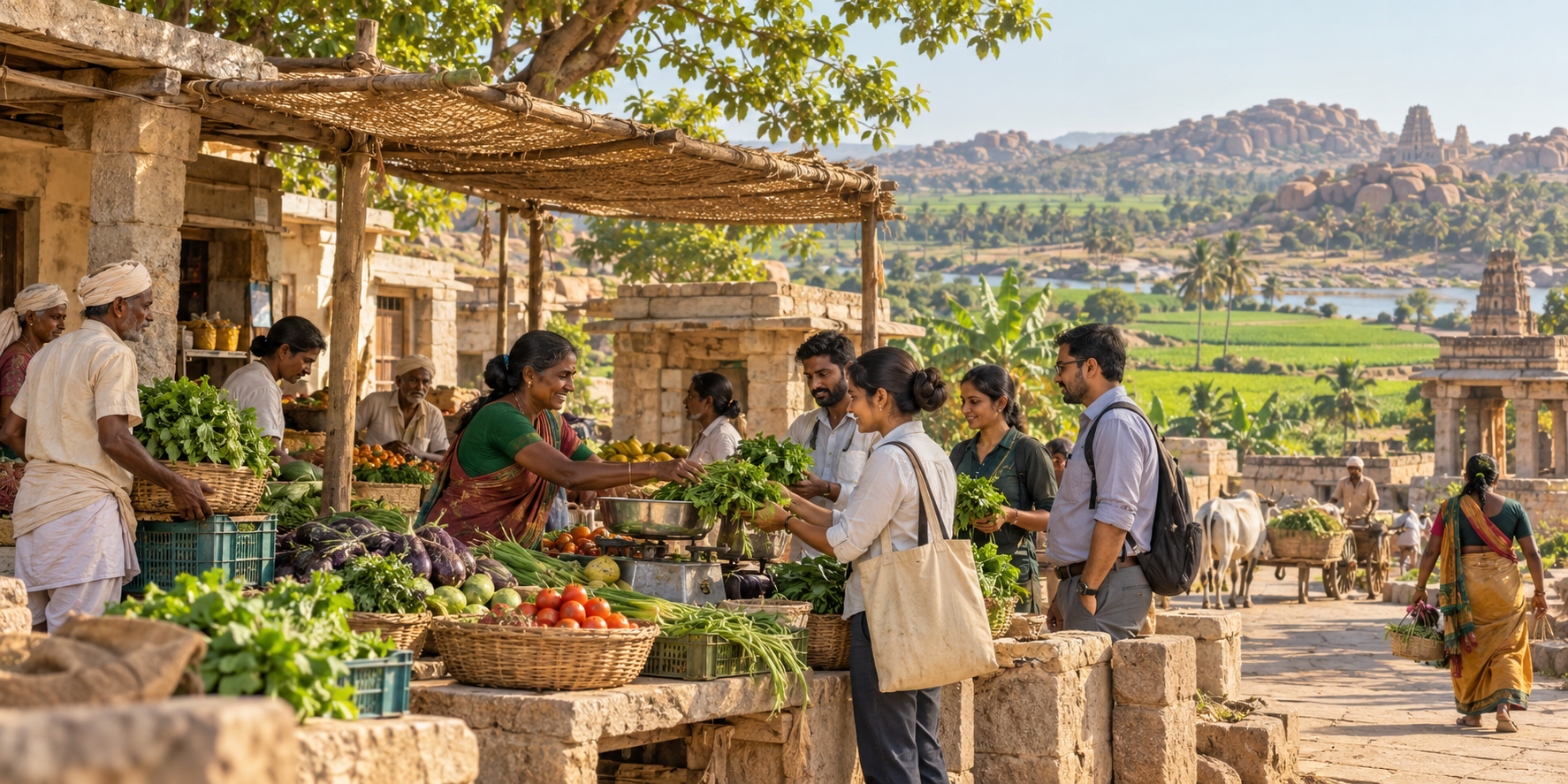
Support continued cultivation through reliable irrigation access, fair procurement by campus canteens, farmer-controlled sales opportunities and protection against nuisance or blocked access. Include tenant cultivators and farm workers in consultation. Farming is a livelihood and food-producing activity, not scenery maintained for office visitors.
Limit PG development through capacity, not favouritism
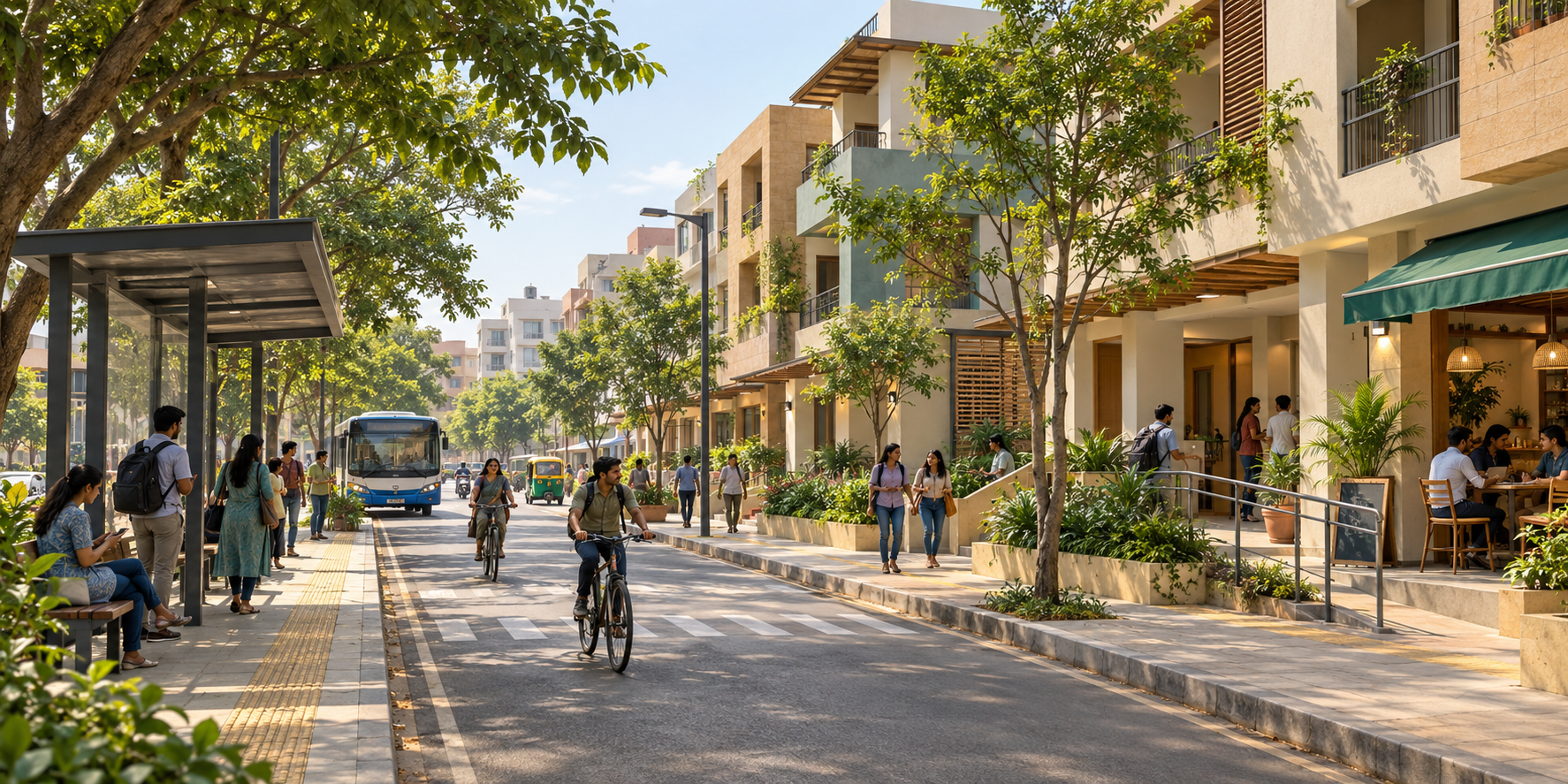
Employee housing should be concentrated in suitable existing settlements with transport links. Prefer compliant existing accommodation and planned infill where appropriate. Any additional PG capacity should follow an assessment of water, sewerage, waste collection, fire access, local rents and neighbourhood conditions.
Publish objective licensing criteria, inspections and an appeals process. An unexplained numerical cap can create scarcity and valuable political favours without protecting residents. Review capacity limits against evidence, and enforce the same rules for influential operators and small owners.
Require safe rooms, accessible facilities where applicable, clear rental agreements and grievance handling. Plan for women employees and late-shift transport. The campus should not bid up housing costs while leaving existing residents with worse services.
Visitors could support local businesses—but the benefit is not automatic
The Vijayanagara district’s Swadesh Darshan 2.0 description already places Hampi tourism within a framework of sustainability, stakeholder engagement and resident wellbeing. A new employment proposal should fit that work rather than create a competing plan.
Employees and visiting clients might use local guides, food businesses, crafts and accommodation. Foreign business visitors are a possible part of that demand, not a guaranteed stream, and this research did not verify that foreigners form a majority of Hampi visitors. Domestic travellers and nearby residents are equally important.
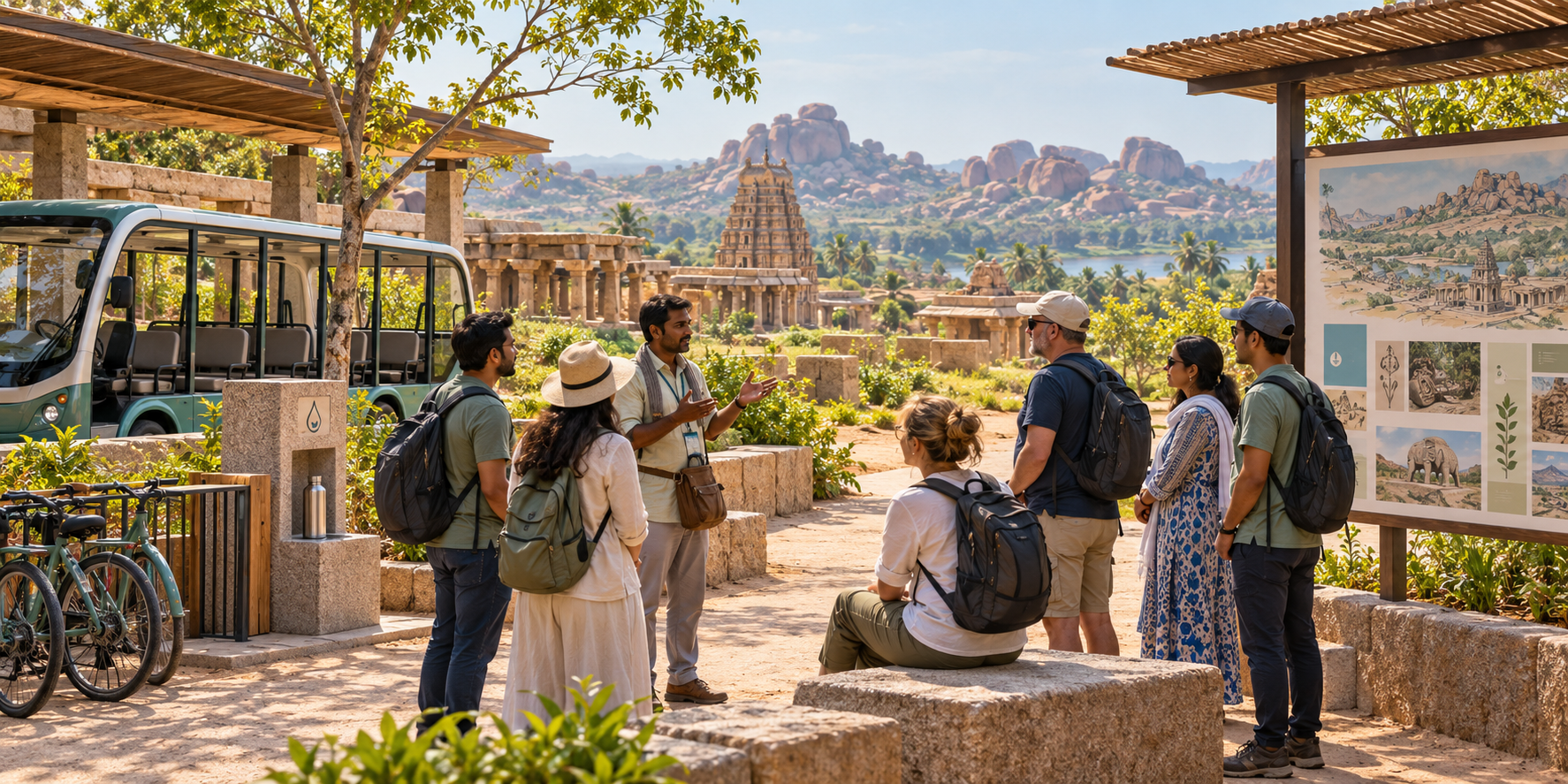
Build optional, small-group visitor programmes with local operators and suitable transport. Track local spending and service pressures, not just footfall. If visitor demand exceeds what a place can accommodate, adding more people is not necessarily progress.
Do not sell unverified adventure or a party district as the plan
Incredible India describes coracle experiences around Hampi. That establishes a tourism activity, not the current permission, safety or operating status of any particular ride. Conditions and official restrictions must be checked before booking.
Online accounts of river jumping, parasailing, helicopter views or parties should not be turned into promises in an investment proposal. This draft has not verified those activities as currently authorised or suitable at the places mentioned. Sanapur is the nearby place name used here; “Sananur” has not been treated as a separately verified destination.
The region can offer cafes, arts, food and social spaces without reproducing a Bengaluru nightlife district beside temples, homes or wildlife habitat. Any permitted entertainment belongs in appropriate serviced areas, with noise, hours, waste, transport and public-safety controls. The right to enjoy an evening does not override a neighbour’s sleep or a place of worship’s setting.
Fund the services before adding demand
The feasibility report should establish dependable power, broadband redundancy, public transport, emergency healthcare, fire response and a staffed maintenance plan. Account for employee housing and visitors in the water and waste budgets, not only office desks.
Require an identified lawful water source that does not simply displace existing community needs, effective wastewater treatment, monitored reuse where suitable and drainage that protects adjoining areas. A borewell and a promise of future sewerage are not a complete infrastructure plan.
A shared shuttle from the urban campus to authorised visitor gateways could reduce parking pressure. Do not assume a new access road, widened heritage road or helipad will receive permission merely because it would be convenient for companies.
A proposal worth testing, with conditions that can stop it
Commission a small feasibility study with heritage specialists, planners, farmers, village representatives, tourism workers and prospective employers. Publish alternative sites, impacts, public costs and reasons for rejecting options. Keep the authority managing leases distinct enough from approval and inspection functions to permit genuine scrutiny.
Proceed only if the evidence supports a suitable site, credible demand, affordable services, protected farming and acceptable heritage effects. Set measurable limits and a review point before any expansion.
The goal is employment near Hampi that helps its communities thrive—not growth that consumes the farms, quiet and historic landscape it depends on. That would be a stronger international story than another large construction announcement.