
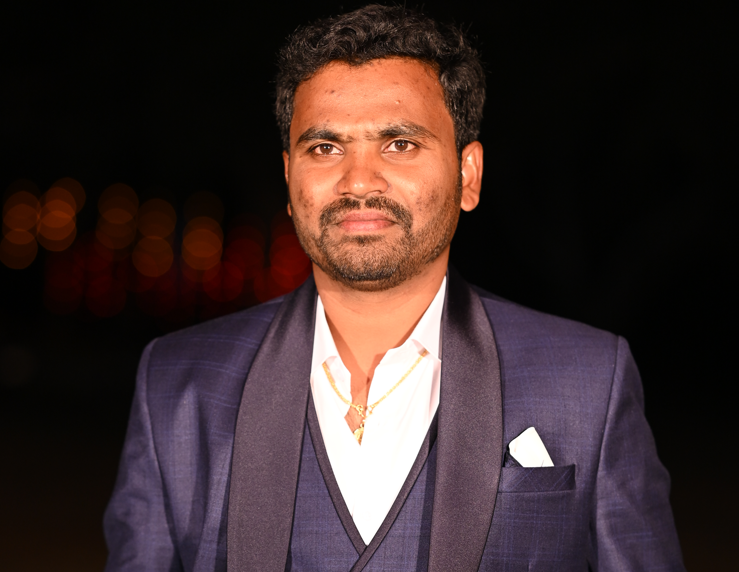
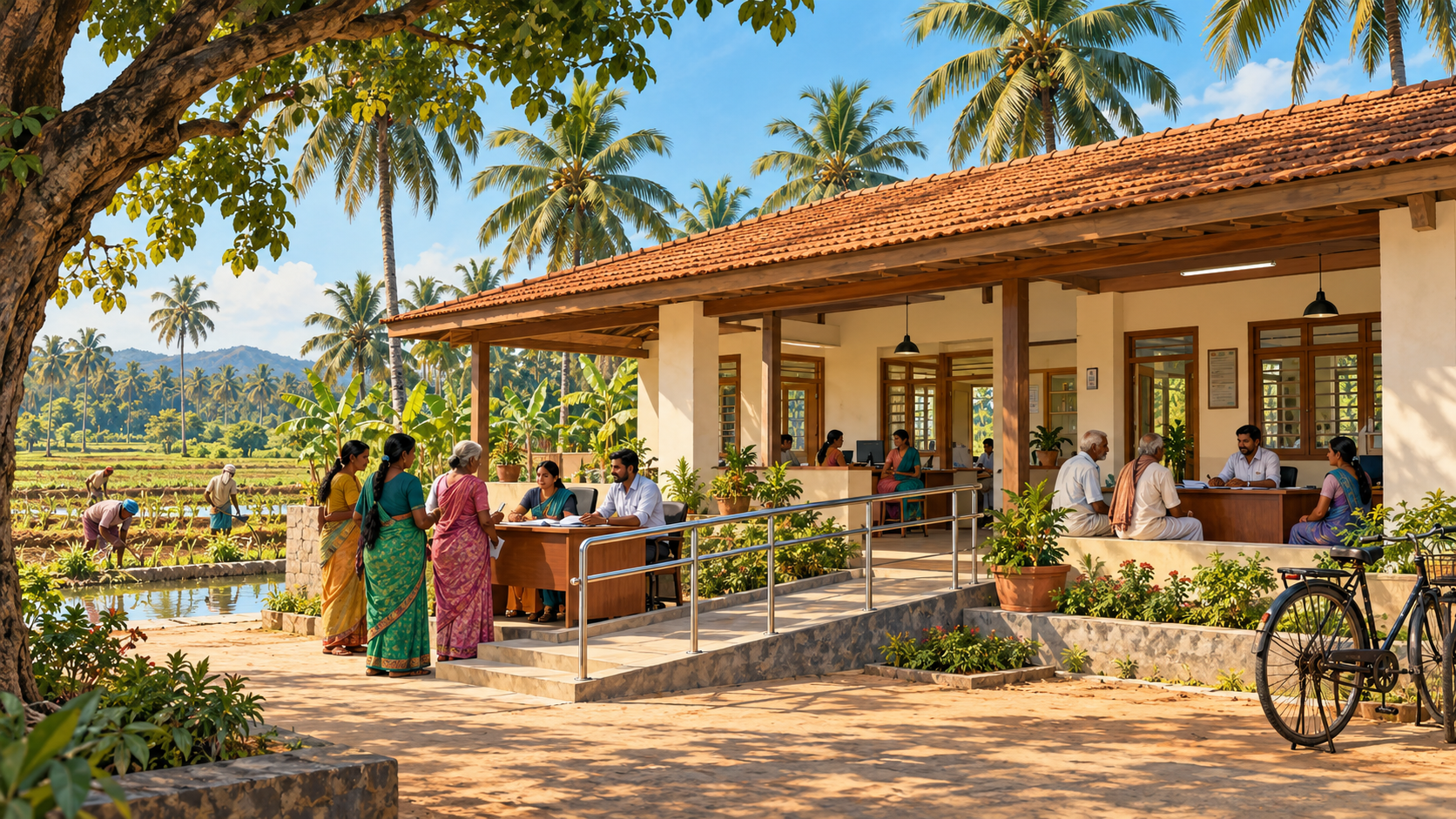
When national politics discusses representation, the conversation often turns to parliamentary seats and constituency boundaries. In my village, I want an equally serious discussion about something closer: how easily can a resident reach an office, explain a problem and get a service?
On 14 September 2024, I wrote to district, Karnataka and Union government offices requesting a new Grama Panchayat centred on Ganganaghatta in Tiptur taluk, Tumakuru district. The proposal included nearby settlements. My argument was that a manageable service area and a nearby, functioning office could make village development more responsive.
What I requested—and what remains unverified
The text of my email, supplied for this article, described Ganganaghatta as part of Dasarighatta Grama Panchayat and proposed a new centre serving Ganganaghatta, Ganganaghatta Baremele, Kalikamba Nagara, Sasalahalli and G. Melanahalli. The two named Ganganaghatta localities were described as settlements belonging to the village; they should not automatically be counted as separate revenue villages.
The letter estimated about 2,500 residents and more than 2,000 voters in Ganganaghatta. It also claimed more than 20,000 voters across the existing Panchayat, referring to 12 major villages and seven voting-booth villages. These are figures from my 2024 representation, not independently verified current administrative statistics. They need reconciliation with official boundaries, population records and electoral rolls before being used to justify a decision.
The official 2011 Census catalogue for Tumkur includes Ganganaghatta as village code 612164. That historical listing does not establish its present population or the current Panchayat boundary. This article has no government acknowledgement, decision or notification confirming approval of my request. My personal phone number and email address are omitted from the public article.
The real issue is the cost of reaching a service
A journey to an office costs more than the bus fare. A worker may lose earnings; an older resident may need somebody to accompany them; a second visit for a missing document can turn a small task into a difficult week. These are the burdens a local assessment should measure rather than assume.
My letter described a ration shop, middle and high schools, a post office and a dairy serving Ganganaghatta and nearby villages. These are author-reported facilities, requiring a current inventory. Their presence could support a practical service centre, but it does not prove that a new Panchayat is legally or financially feasible.
The letter also referred to an area extending over “10 km” and outlying settlements two to three kilometres away. That wording is not a surveyed area measurement: kilometres and square kilometres are different. A proposal should replace it with mapped settlements, road distances, public-transport availability and travel times to the existing office.
Panchayats and MPs solve different representation problems
MPs legislate, scrutinise the Union government and represent constituencies at the national level. A Gram Panchayat is a rural local body whose powers and responsibilities depend on state law and devolution. A new Panchayat cannot take over Parliament’s role, and adding an MP does not automatically improve a village help desk.
The Ministry of Panchayati Raj explains that Article 243G allows state legislatures to devolve planning and implementation responsibilities to Panchayats. Functions, funding and staff must accompany institutional change.
My preference is to give village-level capacity greater priority in the development debate. That is a policy argument, not a claim that Panchayat reorganisation legally replaces parliamentary delimitation. The Election Commission describes delimitation as a separate constitutional and statutory process. This article does not assume that a particular proposed increase in MPs has become law or assign unverified savings to cancelling it.
A new Panchayat requires a state process, not only an email to Delhi
Section 4 of the Karnataka Gram Swaraj and Panchayat Raj Act provides for declaration of Panchayat areas by the Deputy Commissioner, subject to government orders and prior publication. The published text sets a general population range of 5,000–7,000 and contains exceptions, including declaration outside that range with prior government permission.
Population is not the same as the number of voters. Nor should exceptions for specified areas be assumed to apply automatically to Tumakuru. Officials should confirm the applicable amendments and orders, the recognised population basis and the combined proposed area. The estimated 2,500 residents in my letter do not by themselves establish eligibility.
A practical follow-up should seek a written assessment from the Tumakuru district administration and Karnataka’s Rural Development and Panchayat Raj authorities. Copying Union offices can draw attention to a concern, but it does not substitute for the competent state process. Existing Panchayat boundaries, consultation and effects on neighbouring residents all need examination.
Compare three options before selecting one
- A new Panchayat: assess the proposed group of settlements, legal criteria, an accessible headquarters, staffing and annual operating costs.
- A satellite service point: offer scheduled services nearer residents while retaining the existing Panchayat, if this addresses access at lower cost.
- Strengthen the existing office: improve staff availability, village outreach, complaint tracking and published service schedules.
Compare these options using visits required per service, travel time, completion delays, unresolved complaints and the cost of delivery. Digital access can help, but assistance and an offline route remain essential for residents unable to use it.
Creating a new office does not automatically create more total grant money. Some funds may be redistributed, while salaries, buildings and administration add recurring costs. Publish the financing plan and show that both the proposed Panchayat and the remaining Dasarighatta area can function. Development should not improve for one group by quietly removing basic capacity from another.
Turn the representation into a decision-ready village proposal
- Obtain the existing boundary notification and official list of constituent villages and habitations.
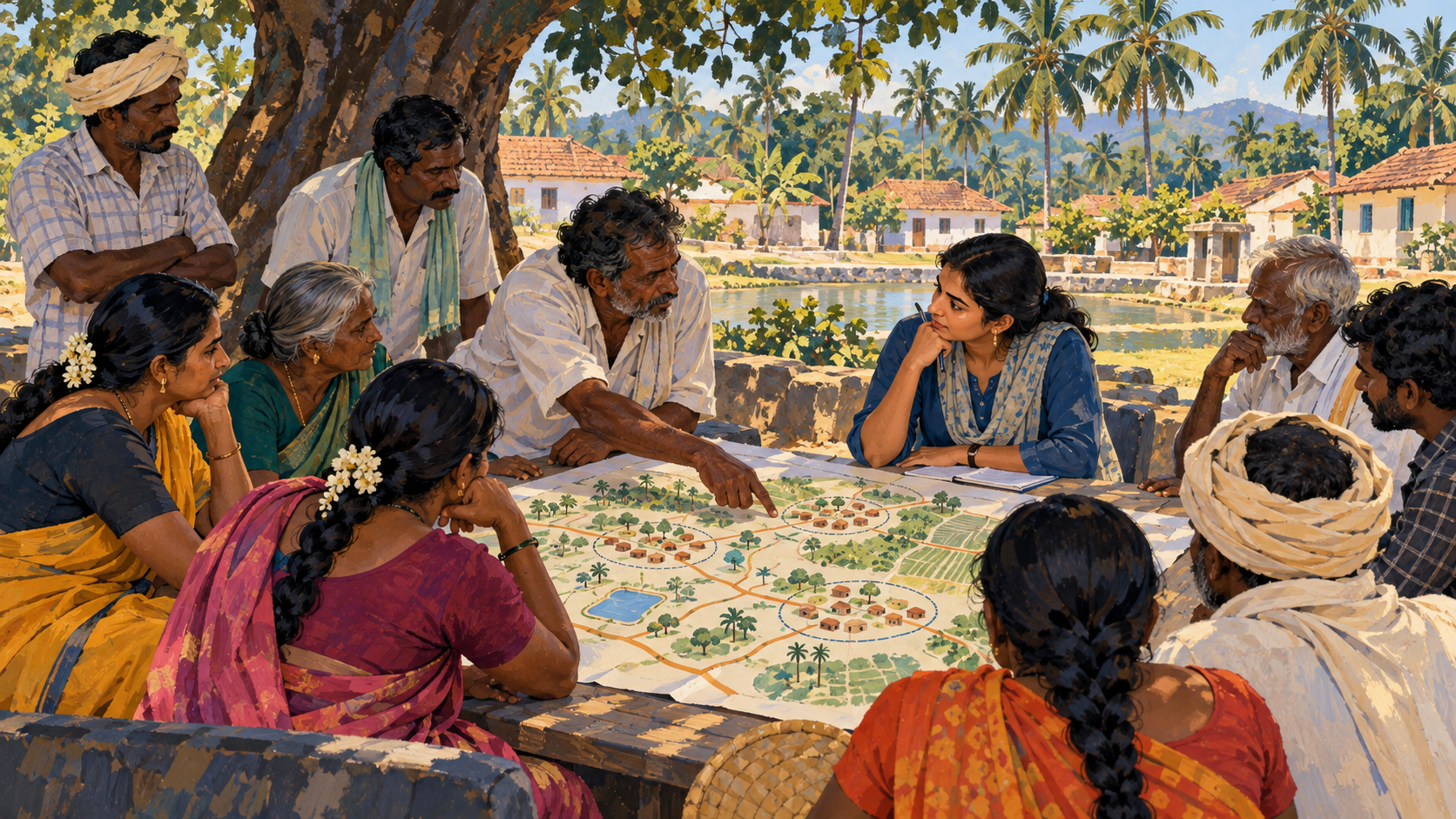
- Prepare a map of the proposed contiguous area, distinguishing revenue villages, hamlets and polling stations.
- Use dated population and voter records separately; avoid double-counting localities within a village.
- Collect service-access evidence with residents’ consent: travel times, missed visits, delays and assistance needs.
- Document consultation with women, disadvantaged communities, outlying hamlets and residents remaining in the existing Panchayat.
- Propose staffing, a lawful office site, operating costs, funding and service standards.
- Ask for an acknowledgement, file reference, reasons for the decision and an explanation of any available review process.
These are recommended preparation steps, not an official application checklist or a promise of approval. Gram Sabha discussion can make the proposal more representative. An author’s statement that a request is “on behalf of the village” should not be presented as evidence of a formal resolution unless that resolution is available.
Measure development by what residents can actually get done
A new nameboard is easy to celebrate. Reliable drinking-water responses, working sanitation, transparent project records and accessible services are harder—and more important. Set measurable goals before reorganising an area, and publish results afterwards.
I want Ganganaghatta’s proposal to receive a reasoned, evidence-based assessment. If a new Panchayat is the best solution, provide the people, powers and resources to make it work. If another arrangement can deliver the same access more effectively, explain it and implement it.
Village development should begin with a resident’s ability to reach government and receive an answer. National representation matters, but it should not crowd out this everyday test of democracy.