

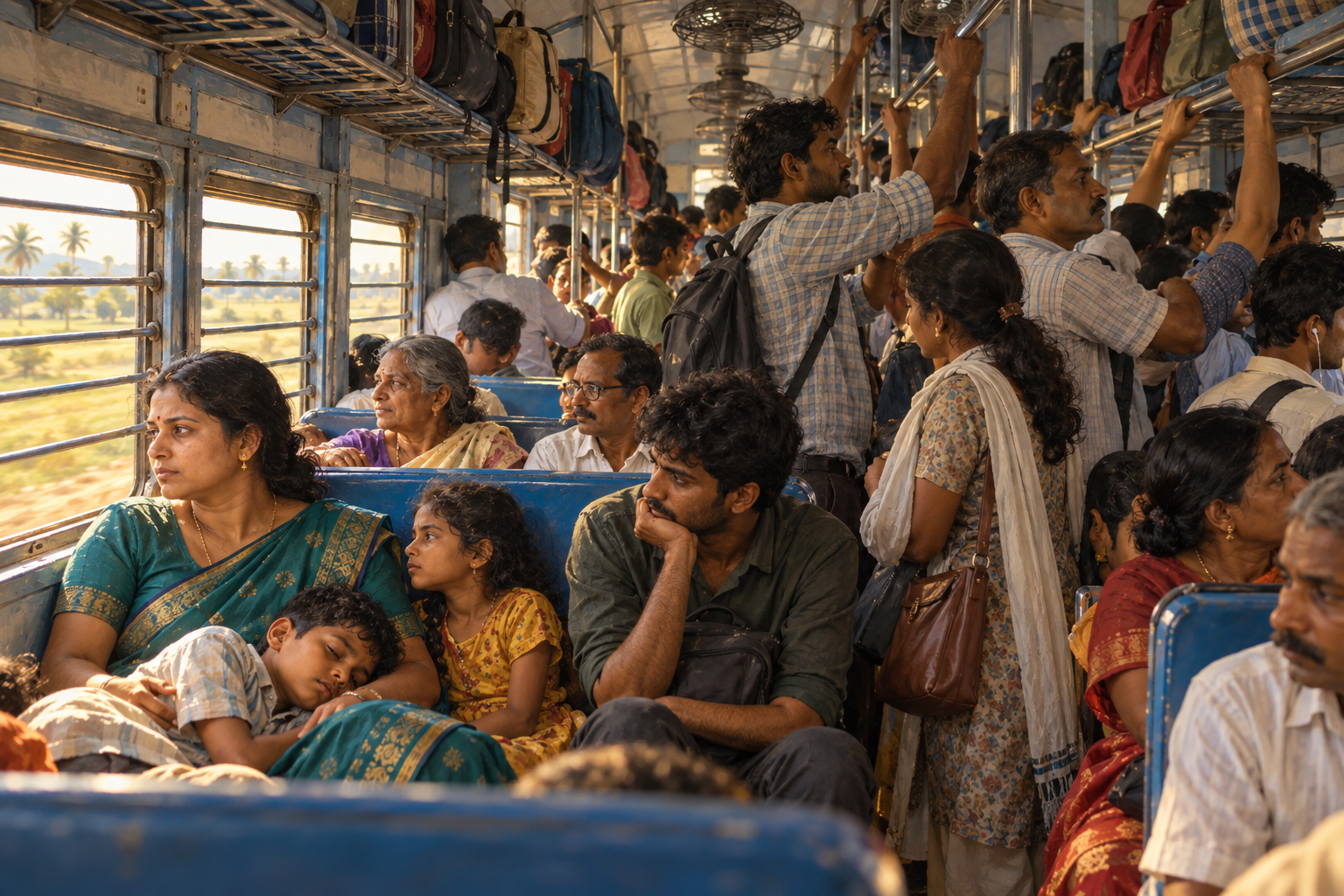
Lakshmisha describes travelling in crowded general compartments and feeling angry that so many people must squeeze into a small part of a train. His proposal is simple: provide equal numbers of reserved and general coaches, or run more trains so ordinary passengers have a realistic choice.
That frustration should not be dismissed because a passenger paid a lower fare. Affordable travel must still be safe and dignified. But a fixed 50:50 split is one policy option to evaluate, not a universal measure of fairness. The useful test is whether people can board and complete the journey in acceptable conditions.
Non-AC does not necessarily mean general
Reserved sleeper, reserved seating, AC accommodation and unreserved general accommodation serve different needs. A non-AC sleeper berth is normally reserved; counting it as general capacity would misrepresent access for an unreserved passenger. An unreserved ticket does not by itself guarantee a seat or permission to occupy reserved accommodation.
In a 25 March 2026 parliamentary reply published by PIB, the Railways described a 22-coach Mail/Express composition policy with 12 general-plus-non-AC-sleeper coaches and eight AC coaches. That is a combined non-AC figure, not a claim of 12 unreserved general coaches. Do not assume the remaining two vehicles are general accommodation either.
The same reply reported 1,250 general coaches used in long-distance trains during FY 2024–25 and 860 coaches for permanent augmentation up to February 2026. These national additions do not establish the composition or adequacy of the particular train a passenger used. The claim that every express has exactly two or four general coaches is not verified.
A 50:50 split is easy to explain, but capacity is more complicated
Coach counts do not directly equal passenger capacity. A coach with sleeping berths, a seated coach and a vehicle containing luggage or operational equipment cannot be treated as identical units. Journey length, seat turnover and passenger demand also differ by section and time of day.
On a route with heavy short-distance unreserved demand, more general accommodation may be justified. On a long overnight route, removing many reserved sleeper berths could hurt low-income passengers who need affordable sleep and certainty. Reserved travel is not used only by wealthy people.
Assess a 50:50 mix for suitable services, but compare it with added MEMU trips, dedicated unreserved trains and targeted augmentation. Preserve accessible accommodation and operational requirements. Fairness should be demonstrated through outcomes, not achieved on paper by relabelling coaches.
Measure the passengers the reservation chart cannot see
Reservation waiting lists show only part of demand. Unreserved ticket sales do not necessarily identify a single train or the maximum load at each section. Add systematic boarding and alighting counts, crowd observations and reports of people unable to board.
Publish corridor-level indicators: availability of affordable departures, busiest sections, access to toilets and doors, waiting time for an alternative and complaints resolved. Use privacy-preserving counts rather than identifiable passenger surveillance. Compare weekdays, Sundays and seasonal peaks.
Do not present crush loading as successful utilisation. A packed coach can indicate service failure even when revenue and ticket sales look strong. Safety limits and applicable coach specifications should guide operation; this article does not invent one universal passenger limit for all coach types.
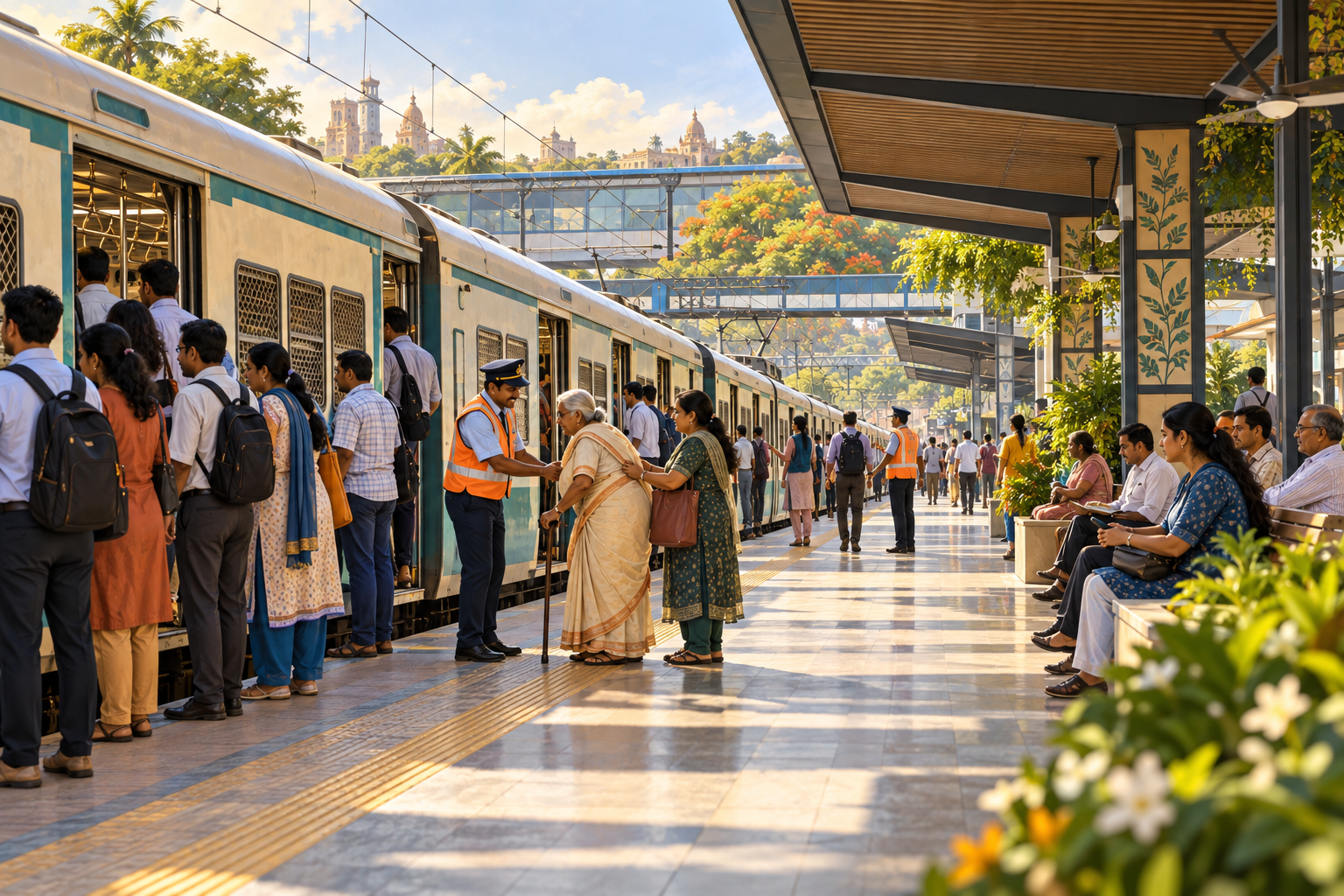
Choose the intervention that adds usable capacity
- Add general coaches where feasible: check platform and loop lengths, rolling-stock compatibility and permitted train formation.
- Review a poorly matched composition: consider changes using actual demand, with advance notice and protection for existing reservations.
- Add local or dedicated unreserved services: target the same corridor and useful departure windows, rather than a distant or inconvenient alternative.
- Strengthen connections: a reliable stopping train can reduce short-distance pressure on an express without taking away overnight berths.
- Expand constrained infrastructure: evaluate signalling, platforms, turnback facilities and maintenance capacity when train paths are the limiting factor.
More trains require rakes, staff, maintenance, power and track capacity. More coaches are not always possible on a train already at its permitted length. These constraints should be explained publicly, with an alternative plan and timetable for improvement, rather than used as a permanent answer to overcrowding.
Crowd management must accompany capacity, not replace it
Provide clear coach-position information, orderly boarding, drinking water, functional toilets and help for elderly and disabled travellers. Staff should prevent dangerous boarding and keep access routes usable without humiliating passengers.
Passengers with confirmed reservations also deserve access to their accommodation. The solution to inadequate general capacity cannot be to let conflict between passengers decide who travels. Provide clear information about permitted travel and alternatives, and address unsafe conditions through railway staff and RailMadad.
For an evidence-based request, record the train number, date, journey section, actual general-coach count and the difficulty experienced. A photograph can document a particular moment, but cannot by itself establish the full route’s demand or a national trend. Avoid identifiable images of vulnerable travellers where unnecessary.
The promise should be affordable space, not only a new train announcement
Ask the division to publish what it will change, when, and what it expects the change to achieve. Review whether crowding fell on the busiest section and whether people at intermediate stations could actually board. If an experiment fails, adjust it and explain why.
A dedicated service can be more useful than an equal split on one express; on another route, a larger general allocation may provide faster relief. The passenger should not have to accept an unbearable journey while these options remain unexamined.
My demand is for enough safe, affordable capacity to meet real travel needs. An equal-coach proposal is a starting point for that discussion. The final measure of success is the journey people experience.