

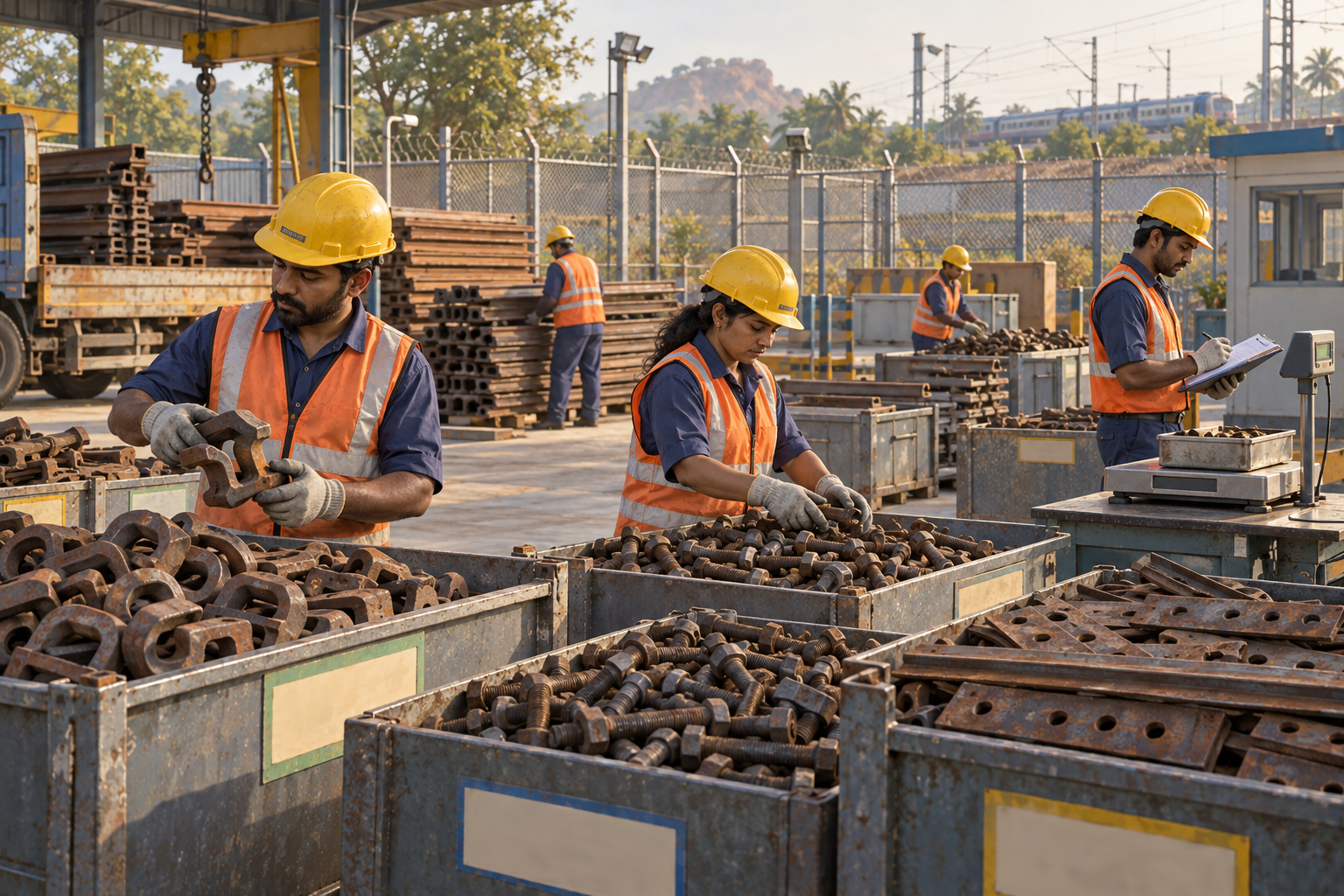
Looking out of a train, Lakshmisha has noticed pieces of metal, bolts and short rail sections near the line. His proposal is to give states responsibility for collecting genuinely discarded railway metal, turn it into agricultural tools and distribute useful equipment to farmers at no charge.
There is a worthwhile public-value question here: can material removed from one public service help another community? But the view from a carriage cannot establish ownership, condition or whether an item is still needed. The workable proposal is a lawful railway–state partnership, not permission for anybody to collect trackside metal.
Metal beside a railway is not automatically abandoned
A rail section might be awaiting installation, inspection, reuse or authorised disposal. Rust and location alone do not establish that it is waste. Even a condemned component does not automatically become state-government property because it lies within that state.
The Railway Property (Unlawful Possession) Act, 1966 governs unlawful possession of railway property. The proposal must begin with the asset owner and authorised railway officials identifying what can lawfully leave railway custody. Changing ownership would require a valid legal and financial arrangement; this article has not identified an existing blanket state entitlement.
Passengers and farmers should not enter the railway corridor or remove bolts, fittings or apparently loose material. Report a suspected hazard from a safe public location to railway staff. Collection should be organised by authorised personnel under railway safety arrangements.
Railway scrap already has a disposal system and a value
Indian Railways has an established e-auction route for scrap. A Western Railway July 2025 notice, for example, advertises permanent-way and rail scrap through the IREPS auction system. It is a dated example of the process, not a currently open offer.
The Ministry of Railways reported ₹6,813.86 crore in scrap-sale earnings for FY 2025–26. That national figure covers railway scrap sales; it is not the value of small metal pieces visible beside tracks, nor an estimate of material available for farmers.
Transferring a valuable lot free or below its lawful sale value carries a public subsidy. That might be justified by a well-designed scheme, but it must be recorded. Calling the feedstock “waste” should not hide the revenue forgone.
Do not assume every old bolt can become a safe hoe
The design should start with farmers’ actual requirements and an engineer’s material assessment. Mixed scrap has different composition, wear and possible contamination. A piece that looks strong may be unsuitable for a cutting edge, welded joint or load-bearing component.
Use qualified manufacturers to specify suitable material, processing, testing, handles, finish and safe working loads. Where direct reuse cannot meet the required specification, authorised recycling and manufacture from suitable certified material may be the better route. Do not distribute untreated fragments or home-made safety-critical machinery parts as a welfare benefit.
Begin with a small selection of simple, maintainable tools that local farmers request. A free tool that breaks, injures somebody or cannot be repaired is poor public service. This article supplies no fabrication instructions or claim that a particular scrap grade is suitable.
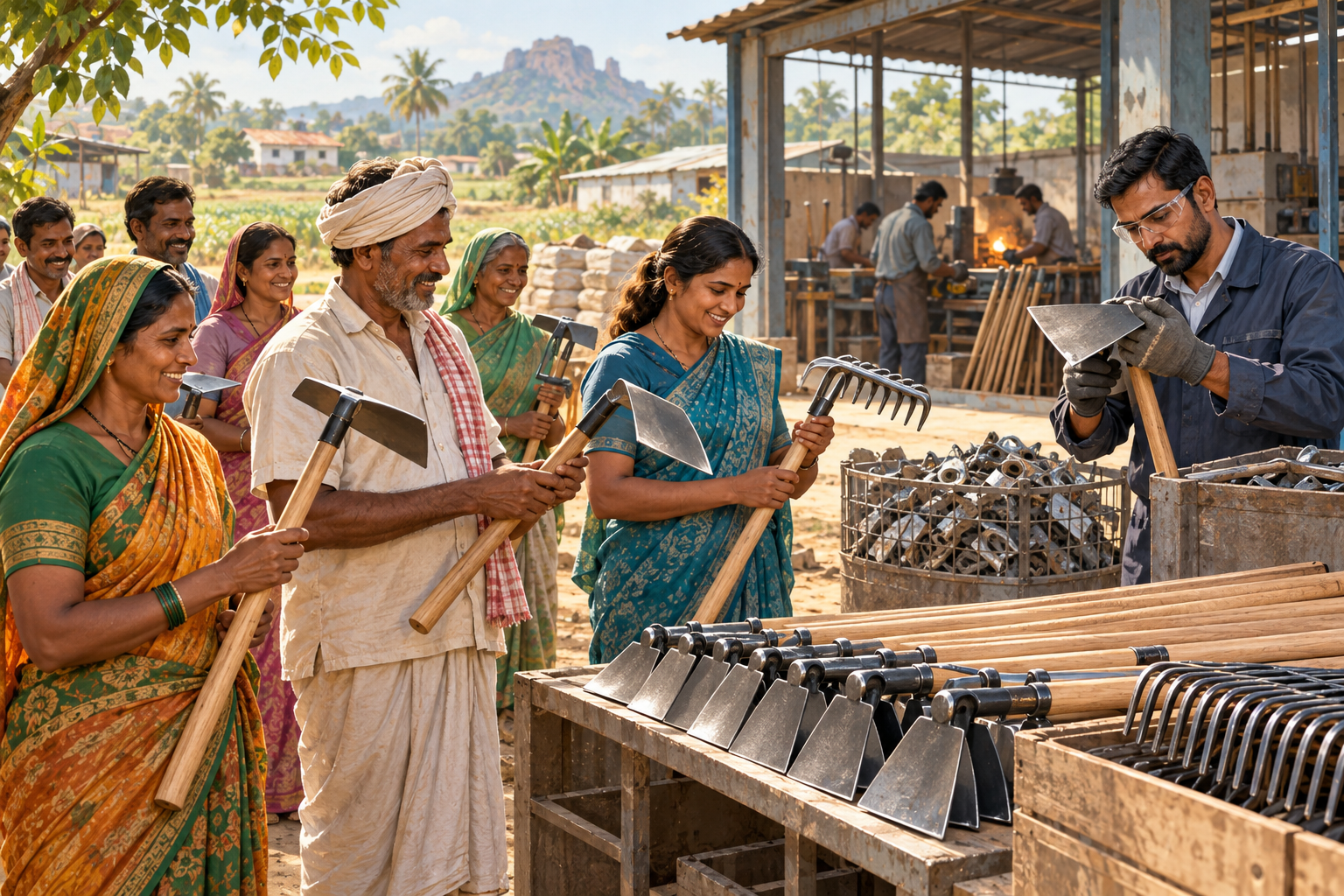
A practical railway–state pilot
- Inventory: railway engineers distinguish reusable stock from material approved for disposal, recording quantity and custody.
- Lawful access: assess procurement through existing disposal rules or a specifically authorised intergovernmental transfer, with valuation and approvals.
- Farmer consultation: choose tools needed for local crops and include women farmers, tenant cultivators and farm workers.
- Competitive manufacture: procure tested finished products with clear quality, repair and warranty conditions.
- Fair distribution: publish eligibility and quantities, maintain an auditable register with privacy safeguards, and provide a complaint route.
- Evaluation: compare durability, use and total public cost against buying equivalent tools through ordinary procurement.
For more expensive equipment, a cooperative tool library or custom-hiring centre may help more households than individual ownership. That is an option to assess, not a reason to distribute equipment farmers did not ask for.
Free for a farmer is not free to produce
The cost sheet should include collection under safe working conditions, transport, sorting, valuation, processing losses, energy, manufacture, testing, storage, distribution and repairs. Compare the full cost per usable tool, not just the scrap purchase price.
There is another possible route: sell scrap transparently and fund a properly budgeted farm-tool programme from public revenue. That may be simpler than tracking particular bolts through a manufacturing chain. Neither model should imply that existing railway receipts are already earmarked for agriculture.
A pilot should publish its findings even if it concludes that ordinary procurement is cheaper. The public benefit is reliable tools and less waste, not a publicity photograph of metal being handed over. Government can earn public trust through useful results and clear accounts.