


You buy a platform ticket to help your family catch a train. The train is delayed. You stay to assist them, but the ticket’s clock keeps running. When a checker arrives, the conversation becomes about your expired ticket rather than the delay.
Is that fair? My view is that a public service should offer a clear, practical way to deal with this situation. Citizens should follow access rules, but railway policy should also recognise waiting caused by its own service disruption.
What the Kalyan reports establish
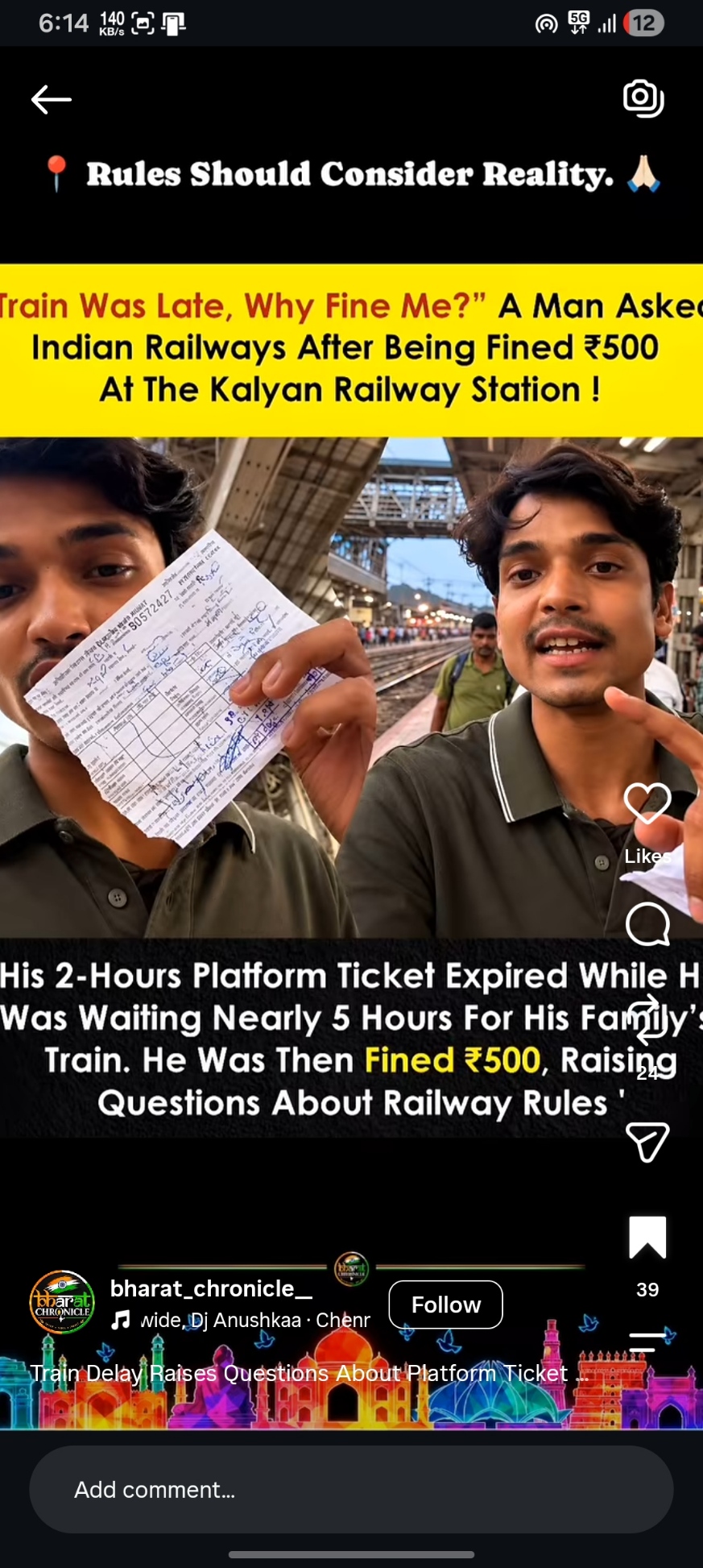
A Free Press Journal report published on 12 June 2026 described a visitor accompanying relatives at Kalyan, an approximately five-hour wait and a ₹500 penalty after his platform ticket expired. The article placed the incident on 11 June. This is an older reported incident, even if its video is circulating again now.
The screenshot supplied for this article shows an Instagram repost attributed on screen to @bharat_chronicle_. Its original link and posting date have not been verified. It illustrates the claim being discussed; it does not authenticate the partly obscured receipt.
We have not independently established the train number, precise delay, legal charge recorded on the receipt or final review outcome. The reported ₹500 must therefore not be presented as the automatic nationwide penalty for every expired platform ticket.
The two-hour rule is real
Indian Railways’ published UTS paperless-ticket help document, which states that a platform ticket is valid for two hours from booking. Published commercial-manual material also describes two-hour validity. A platform ticket permits platform access; it is not a ticket to travel on a train.
A 14 June follow-up report attributed to an unnamed senior Central Railway official the explanation that the penalty concerned ticket expiry, not the train delay. The same report described activist Sameer Zaveri’s call for a review of the rule. These are newspaper-reported positions, not an official case order independently obtained for this article.
No nationwide automatic delay-linked extension was verified during this research. Do not assume a delayed train makes an expired platform ticket valid. Ask authorised station staff before expiry about lawful renewal or permission.
A rule can be enforceable and still need improvement
The strongest criticism is about policy design. A visitor who bought a ticket and remained to help an older relative is not necessarily behaving like someone deliberately avoiding payment. A system should be able to examine those circumstances without making relief depend on an argument at the gate.
There is also a legitimate reason to manage access. Platforms must remain usable for passengers, staff and emergency movement. Unlimited waiting rights could make crowd management harder. Simply removing all limits would ignore that responsibility.
The fairer balance is a defined extension for a defined disruption. It should be available to an ordinary person without influence, a viral video or a smartphone. That would protect both access control and the citizen who has already tried to comply.
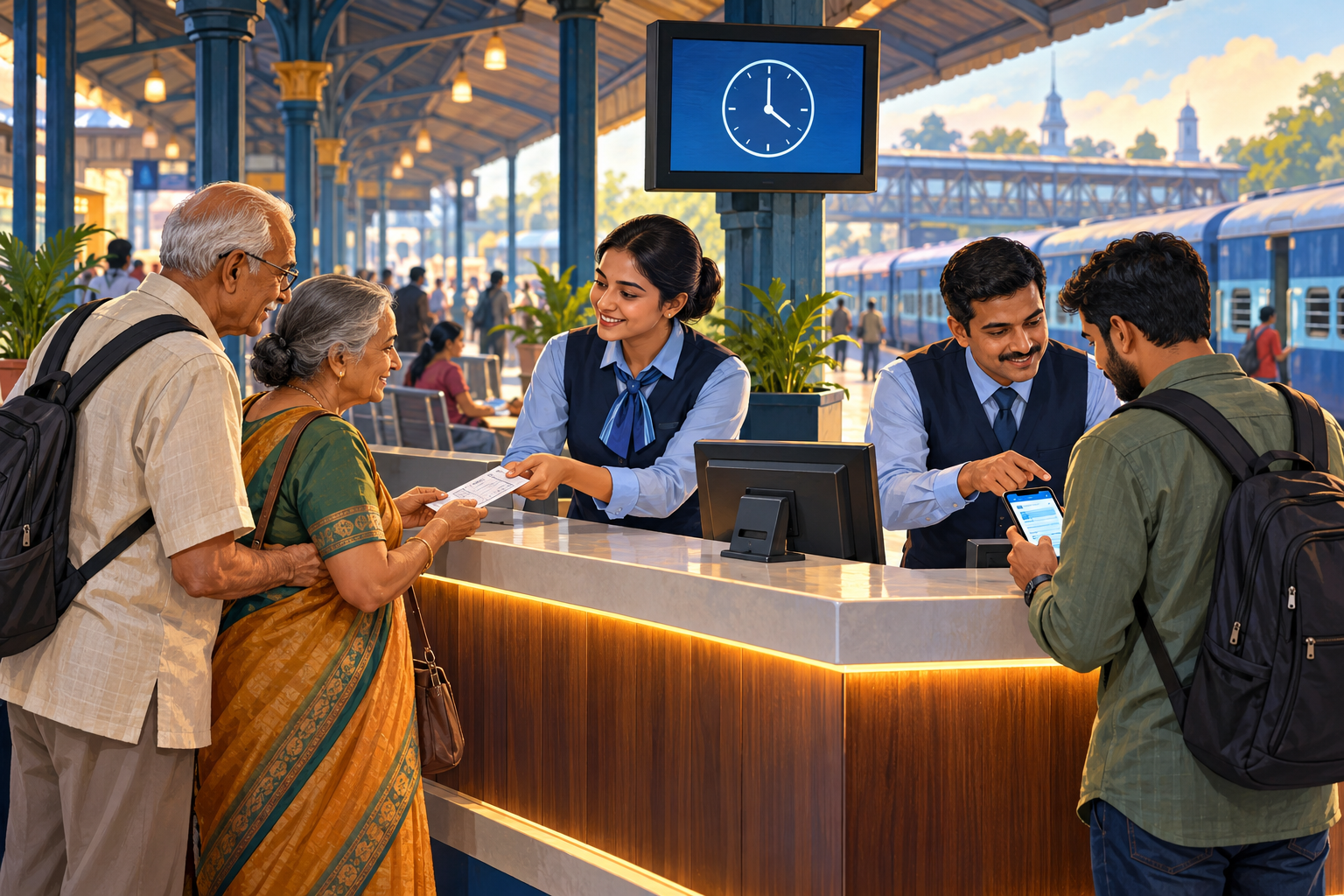
A practical delay-extension proposal
The following is a reform proposal, not a facility confirmed to exist:
- Link the request to a train and date. Let a visitor identify the delayed service they are meeting or seeing off, with safeguards against repeated misuse.
- Verify the operational delay. Use the railway’s recorded running information rather than asking families to prove everything through social media.
- Provide a limited extension. Publish when it starts and ends, including an appropriate period after actual arrival or departure. The exact duration should be tested, not guessed here.
- Offer a paper route. A counter or authorised assistance desk should handle the same request for people without working phones, data or digital confidence.
- Explain refusals and crowd restrictions. If safety requires visitors to leave, provide clear directions and an accessible alternative waiting arrangement where feasible.
A pilot at selected busy stations could measure demand, crowding, staff time, disputes and misuse. Publish the results before expanding the scheme. A complicated application that takes longer than buying another ticket would fail the practical test.
What to do if you face a similar penalty
- Keep the platform ticket, payment record and official penalty receipt. Note the station, date, time and train involved.
- Ask calmly for the rule applied and a breakdown of the amount. An explanation of the charge matters more than a verbal promise.
- Retain available official running-status evidence. Do not interfere with staff duties or put yourself near unsafe track areas to collect it.
- Use RailMadad’s station-complaint channel or 139 to request a documented review. Explain the chronology and ask whether the charge was correctly imposed and whether relief is available.
- Keep the complaint reference and written response. If the dispute remains unresolved, ask the relevant authority about the applicable review route; obtain legal advice where necessary.
These steps do not guarantee cancellation or a refund. Avoid posting unredacted tickets, family details, PNRs or phone numbers publicly. A complaint should be specific enough to investigate without exposing unnecessary personal information.
Fairness should not depend on going viral
The available material does not prove that a particular employee acted corruptly or that this penalty was unlawful. It also does not remove the government’s responsibility to explain how an access rule should work when its service is delayed.
Publish the validity condition prominently at purchase, give timely renewal guidance and provide a consistent review mechanism. If a delay exception is adopted, train staff and tell the public exactly how it works. Frontline employees should not have to invent policy during a confrontation.
My answer is that the present situation raises a reasonable fairness concern, but a screenshot alone cannot decide the individual case. The constructive demand is straightforward: when the railway’s timetable changes, give compliant visitors a transparent way to adjust their permission to wait. Public trust grows when rules can account for reality without abandoning safety.